

Three months ago, we analyzed JEPQ to understand how this ETF works. I recommend revisiting the first article (First article on JEPQ) for those unfamiliar with this product. It appears complex, but it really isn’t. Simply put, the product promises more income, fewer capital gains, and smaller drawdowns. In exchange, it accepts lower total returns. Still, this ETF remains controversial despite the clarity of its promise. Now, two questions arise: Is the controversy justified? And have the results since 2023 lived up to the initial expectations?
I/ JEPQ: Did the Risky Bet of 2023 Pay Off in 2025? A Deep Dive into the Debates
A. Timeline of the Debate: From 2023 Optimism to Growing Doubts
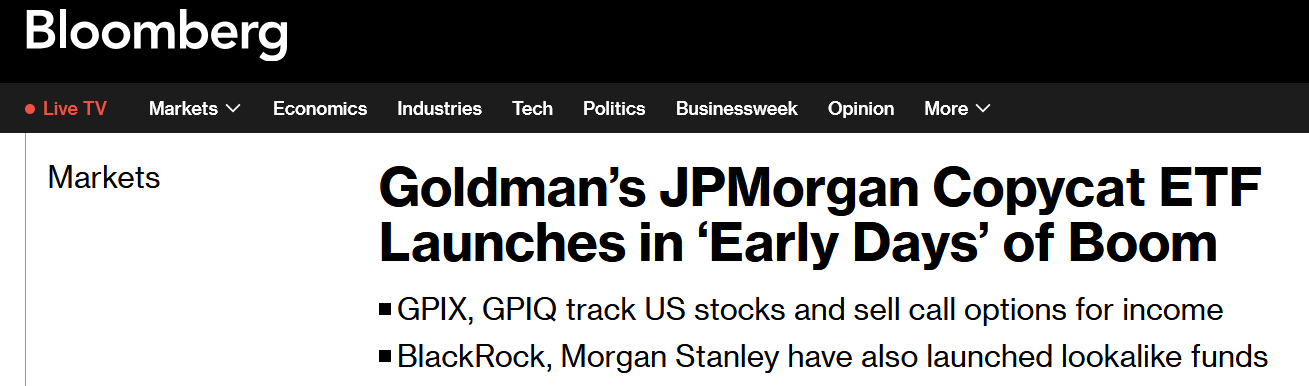
In 2023, JEPQ launched as an intriguing hybrid for investors. Its distinctive strategy—combining high monthly income with Nasdaq 100 exposure—was celebrated by optimists as ideal for a rising market with muted volatility. Advocates maintained that its actively managed covered-call strategy would outperform rivals like QYLD, offering a superior risk-reward balance compared to pure growth ETFs. Enthusiasm was strong at that stage.
(Source: Bloomberg)
However, as the year progressed, doubts emerged. Analysts contended the strategy had structural weaknesses, questioning whether JEPQ could truly fulfill its long-term promises. The main critique centered on its “capped upside, uncapped downside” profile, which, combined with historically low volatility, made it unattractive both for growth seekers and income-focused investors. Critics also pointed to design flaws, especially since other covered-call ETFs sometimes delivered stronger returns. On Seeking Alpha, critical articles have surged recently (between May 22 and June 30, 2025), coinciding with the fund’s rising popularity.
Unlock the Performance Verdict: Did JEPQ Deliver?
You’ve seen the controversy: Is JEPQ’s hybrid strategy a flawed gimmick, risking NAV erosion for capped gains? Or is it a smart compromise for passive income?
The theoretical debate ends now. The remainder of this deep-dive is hosted on our main platform, where we dissect the real-world results to find the answer.
In the full article, you will see the conclusive evidence:
The Facts: Detailed analysis of JEPQ’s +24.89% total return in 2024 and its 11.13% yield, proving whether the NAV erosion fears were justified.
The Performance Charts: Visual evidence on income stability, capital gains, and a comparison with key alternatives.
The Final Verdict: Why this controversial ETF is now the largest holding in my global income portfolio and how it fits into a strategy focused on double-digit income and moderate capital gain.
To see the facts that settle the JEPQ debate and how this fund impacts your income strategy, click the button below to read the complete article on our website:
Liked this Deep-Dive? Buy Me a Coffee!
Your support keeps this newsletter independent and research-driven. If this analysis saved you time or gave you a new investment idea, consider making a one-time donation. Every contribution helps me maintain part of the research free and accessible to everyone.
Disclaimer: This article is for informational and educational purposes only and should not be considered financial or investment advice. The views expressed are solely those of the author and do not constitute a recommendation to buy, sell, or hold any security. Always conduct your own research and consult with a professional before making any investment decisions.